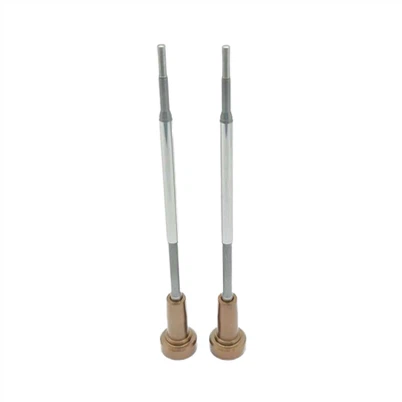
What is the importance of a diesel valve in a diesel engine?
Leave a message

Diesel engines are the heart of numerous industrial and automotive applications, powering everything from heavy - duty trucks to large ships. Among the many components that make up a diesel engine, the diesel valve plays a crucial and often under - appreciated role. As a diesel valve supplier, I have witnessed firsthand the significance of these small yet vital parts in the proper functioning of diesel engines.
The Basics of Diesel Engines
Before delving into the importance of diesel valves, it's essential to understand the basic principles of how a diesel engine works. A diesel engine operates on the principle of compression ignition. Unlike gasoline engines that use spark plugs to ignite the air - fuel mixture, diesel engines compress air to a high temperature and pressure. When fuel is injected into this highly compressed and hot air, it ignites spontaneously.
The four - stroke cycle, which consists of intake, compression, power, and exhaust strokes, is the most common operating cycle in diesel engines. During the intake stroke, air is drawn into the cylinder. In the compression stroke, the air is compressed to a high degree. The power stroke occurs when the fuel is injected and ignited, generating force that moves the piston. Finally, in the exhaust stroke, the burned gases are expelled from the cylinder.
The Role of Diesel Valves in the Intake Stroke
Diesel valves are gatekeepers that control the flow of air and exhaust gases in and out of the engine cylinders. In the intake stroke, the intake valve opens to allow fresh air to enter the cylinder. The proper opening and closing of the intake valve are critical for several reasons.
Firstly, it ensures an adequate supply of air for combustion. If the intake valve does not open fully or at the right time, the amount of air entering the cylinder will be insufficient. This can lead to incomplete combustion, resulting in reduced power output, increased fuel consumption, and higher emissions. For example, in a large - scale diesel generator used in an industrial setting, an intake valve malfunction can cause a significant drop in power generation, affecting the entire production process.
Secondly, the shape and design of the intake valve can influence the airflow pattern inside the cylinder. A well - designed intake valve can create a swirling motion in the incoming air, which helps in better mixing of the air and fuel. This improves the combustion efficiency and enhances the overall performance of the engine.
Compression Stroke and Diesel Valves
During the compression stroke, both the intake and exhaust valves must be closed tightly. The diesel valves need to form a perfect seal to prevent any leakage of the compressed air. If there is even a small amount of air leakage past the valves, the compression ratio will be reduced.
A lower compression ratio means that the air will not be compressed to a high enough temperature for efficient ignition of the fuel. As a result, the engine may experience hard starting, misfires, and a decrease in power. In heavy - duty diesel engines used in construction equipment, such as bulldozers and excavators, maintaining a proper compression ratio is essential for the equipment to perform heavy - lifting tasks effectively.


Power Stroke and Diesel Valves
Although the diesel valves are closed during most of the power stroke, their design and durability still have an impact on this phase. The high - pressure and high - temperature environment during the power stroke can put a lot of stress on the valves. Valves made from high - quality materials and with proper heat - treatment processes are more likely to withstand these extreme conditions without deforming or wearing out quickly.
A damaged valve during the power stroke can lead to a loss of pressure in the cylinder, reducing the force exerted on the piston and thus decreasing the power output of the engine. In a diesel - powered truck, a faulty valve can cause a significant reduction in acceleration and towing capacity, making it less efficient for long - haul transportation.
Exhaust Stroke and Diesel Valves
The exhaust valve opens during the exhaust stroke to allow the burned gases to exit the cylinder. The timely opening and smooth operation of the exhaust valve are crucial for efficient engine operation. If the exhaust valve does not open on time, the exhaust gases will not be expelled completely, leaving a residual amount in the cylinder.
This residual gas can mix with the fresh air during the next intake stroke, diluting the air - fuel mixture and reducing the combustion efficiency. Additionally, the exhaust valve needs to be able to withstand the high - temperature and corrosive nature of the exhaust gases. Valves with good corrosion - resistance properties can have a longer service life, reducing maintenance costs and downtime.
Types of Diesel Valves and Their Importance
There are different types of diesel valves, including intake valves, exhaust valves, and injector valves. Injector valves are responsible for injecting the fuel into the cylinder at the right time and in the right quantity. Precision in fuel injection is essential for optimal combustion.
For example, the G17 Orifice Plate For Toyota injector 23670 - 08030/0E070/0E060/0E100/0E140/08020 is a critical component in some diesel injection systems. It helps in controlling the flow of fuel and ensuring that the fuel is injected in a fine mist, which promotes better mixing with the air and more efficient combustion.
The F 00V C01 502 is another important valve used in Bosch - based diesel injection systems. It plays a key role in regulating the pressure and flow of fuel, which is essential for maintaining the correct fuel - air ratio in the engine.
The 28#Pressure Control Common Rail Valve Orifice Plate For Denso is designed to control the pressure in the common - rail fuel system. This is crucial for accurate fuel injection and efficient engine operation, especially in modern diesel engines with advanced common - rail technology.
Importance of Quality Diesel Valves for Engine Longevity
Using high - quality diesel valves is directly related to the longevity of the engine. Inferior valves are more likely to wear out quickly, leading to increased maintenance requirements and higher costs in the long run. High - quality valves can withstand the harsh operating conditions of diesel engines, reducing the frequency of valve replacements.
In addition, well - designed valves can contribute to overall engine reliability. A reliable engine is essential for industries that rely on diesel - powered equipment, such as mining, agriculture, and transportation. For example, in a mining operation, a reliable diesel engine can ensure continuous operation of heavy - machinery, maximizing productivity and minimizing downtime.
Impact on Emissions and Environmental Regulations
Diesel engines are subject to strict emissions regulations around the world. The proper functioning of diesel valves is closely related to reducing emissions. Efficient combustion, which is facilitated by well - operating valves, can result in lower levels of harmful pollutants such as particulate matter, nitrogen oxides (NOx), and carbon monoxide (CO).
For instance, a well - sealed intake valve ensures a proper air - fuel ratio, which can lead to more complete combustion and less unburned fuel being released into the atmosphere. Similarly, a properly functioning exhaust valve helps in expelling the exhaust gases efficiently, reducing the likelihood of pollutants being recirculated in the engine.
Conclusion and Call to Action
In conclusion, diesel valves are an integral part of diesel engines, playing a vital role in every stage of the engine's operation. From controlling the airflow and fuel injection to expelling exhaust gases, the performance of diesel valves directly affects the power output, fuel efficiency, emissions, and longevity of the engine.
As a diesel valve supplier, we understand the importance of providing high - quality valves that meet the strict requirements of modern diesel engines. Our valves are designed and manufactured using the latest technologies and high - grade materials to ensure optimal performance and reliability.
If you are in the market for diesel valves or have any questions about our products, we invite you to contact us for a detailed discussion. We are ready to assist you in finding the right valves for your specific diesel engine applications and to provide you with the best solutions for your needs.
References
- Heywood, J. B. (1988). Internal Combustion Engine Fundamentals. McGraw - Hill.
- Taylor, C. F. (1985). The Internal Combustion Engine in Theory and Practice. MIT Press.
- Ricardo, H. R. (1928). The High - Speed Internal - Combustion Engine. Blackie & Son Limited.